


Eating Disorders
Eating Disorder Treatment and Recovery
How to overcome your eating disorder and gain true self-confidence


This therapist directory is offered in partnership with BetterHelp. If you sign up for therapy after clicking through from this site, HelpGuide will earn a commission. This helps us continue our nonprofit mission and continue to be there as a free mental health resource for everyone.
Need to talk to someone now? Find a crisis helpline
If you're a BetterHelp therapist with questions about your directory listing, please contact therapists@betterhelp.com
Are you or a loved one struggling with anorexia? Explore the warning signs, symptoms, and causes of this serious eating disorder—as well as how to get the help you need.

Anorexia nervosa is a serious eating disorder characterized by a refusal to maintain a healthy body weight, an intense fear of gaining weight, and a distorted body image. Anorexia can result in unhealthy, often dangerous weight loss. In fact, the desire to lose weight may become more important than anything else. You may even lose the ability to see yourself as you truly are.
While it is most common among adolescent women, anorexia can affect women and men of all ages. You may try to lose weight by starving yourself, exercising excessively, or using laxatives, vomiting, or other methods to purge yourself after eating. Thoughts about dieting, food, and your body may take up most of your day—leaving little time for friends, family, and other activities you used to enjoy. Life becomes a relentless pursuit of thinness and intense weight loss. But no matter how skinny you become, it’s never enough.
The intense dread of gaining weight or disgust with how your body looks, can make eating and mealtimes very stressful. And yet, food and what you can and can’t eat is practically all you can think about.
But no matter how ingrained this self-destructive pattern seems, there is hope. With treatment, self-help, and support, you can break the self-destructive hold anorexia has over you, develop a more realistic body image, and regain your health and self-confidence.
There are three types of anorexia:
Ask yourself the following questions:
BetterHelp is an online therapy service that matches you to licensed, accredited therapists who can help with depression, anxiety, relationships, and more. Take the assessment and get matched with a therapist in as little as 48 hours.
Take Assessment HelpGuide is user supported. We earn a commission if you sign up for BetterHelp’s services after clicking through from this site. Learn moreWhile people with anorexia often exhibit different habits, one constant is that living with anorexia means you’re constantly hiding those habits. This can make it hard at first for friends and family to spot the warning signs. When confronted, you might try to explain away your disordered eating and wave away concerns. But as anorexia progresses, people close to you won’t be able to deny their instincts that something is wrong—and neither should you. If eating and weight control your life, you don’t have to wait until your symptoms have progressed or your health is dangerously poor before seeking help.
Dieting despite being thin. Following a severely restricted diet. Eating only certain low-calorie foods. Banning “bad” foods such as carbohydrates and fats.
Obsession with calories, fat grams, and nutrition. Reading food labels, measuring and weighing portions, keeping a food diary, reading diet books.
Pretending to eat or lying about eating. Hiding, playing with, or throwing away food to avoid eating. Making excuses to get out of meals (“I had a huge lunch” or “My stomach isn’t feeling good”).
Preoccupation with food. Constantly thinking about food. Cooking for others, collecting recipes, reading food magazines, or making meal plans while eating very little.
Strange or secretive food rituals. Refusing to eat around others or in public places. Eating in rigid, ritualistic ways (e.g. cutting food “just so,” chewing food and spitting it out, using a specific plate).
Dramatic weight loss. Rapid, drastic weight loss with no medical cause.
Feeling fat, despite being underweight. You may feel overweight in general or just “too fat” in certain places, such as the stomach, hips, or thighs.
Fixation on body image. Obsessed with weight, body shape, or clothing size. Frequent weigh-ins and concern over tiny fluctuations in weight.
Harshly critical of appearance. Spending a lot of time in front of the mirror checking for flaws. There’s always something to criticize. You’re never thin enough.
[Read: Body Shaming: Causes, Effects, and Improving Your Body Image]
Denial that you’re too thin. You may deny that your low body weight is a problem, while trying to conceal it (drinking a lot of water before being weighed, wearing baggy or oversized clothes).
Using diet pills, laxatives, or diuretics. Abusing water pills, herbal appetite suppressants, prescription stimulants, ipecac syrup, and other drugs for weight loss.
Throwing up after eating. Frequently disappearing after meals or going to the bathroom. May run the water to disguise sounds of vomiting or reappear smelling like mouthwash or mints.
Compulsive exercising. Following a punishing exercise regimen aimed at burning calories. Exercising through injuries, illness, and bad weather. Working out extra hard after bingeing or eating something “bad.”
There are no simple answers to the causes of anorexia. Anorexia is a complex condition that arises from a combination of many social, emotional, and biological factors. Although our culture’s idealization of thinness plays a powerful role, there are many other contributing factors, including your family environment, emotional difficulties, low self-esteem, and traumatic experiences you may have gone through in the past.
Psychological causes. People with anorexia are often perfectionists and overachievers. They tend to be the “good” daughters and sons who do what they’re told, excel in everything they do, and focus on pleasing others. But while they may appear to have it all together, inside they feel helpless, inadequate, and worthless. Through their harshly critical lens, if they’re not perfect, they’re a total failure.
Family and social pressures. In addition to the cultural pressure to be thin, there are other family and social pressures that can contribute to anorexia. These include participation in an activity that demands slenderness, such as ballet, gymnastics, or modeling. It can also include having parents who are overly controlling, put a lot of emphasis on looks, diet themselves, or criticize their children’s bodies and appearance. Stressful life events—such as the onset of puberty, a breakup, or going away to school—can also trigger anorexia.
Biological causes. Research suggests that a genetic predisposition to anorexia may run in families. If a girl has a sibling with anorexia, she is 10 to 20 times more likely than the general population to develop anorexia herself. Brain chemistry also plays a significant role. People with anorexia tend to have high levels of cortisol, the brain hormone most related to stress, and decreased levels of serotonin and norepinephrine, which are associated with feelings of well-being.
While the causes of anorexia are uncertain, the physical effects are clear. When your body doesn’t get the fuel it needs to function normally, it goes into starvation mode and slows down to conserve energy. Essentially, your body begins to consume itself. If self-starvation continues and more body fat is lost, medical complications pile up and your body and mind pay the price.
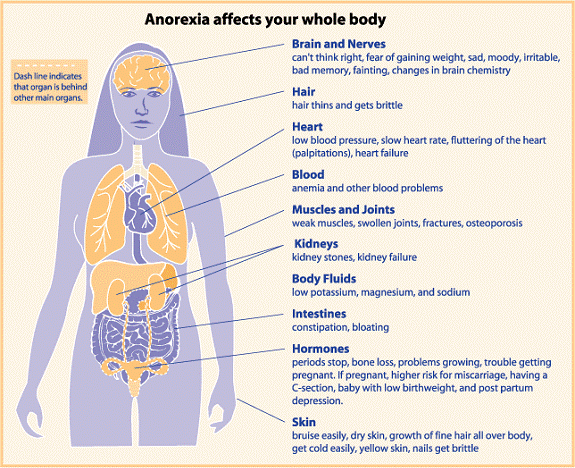
Source: National Women’s Health Information Center
Deciding to get help for anorexia is not an easy choice to make. It’s not uncommon to feel like anorexia is part of your identity—or even your “friend.” You may think that anorexia has such a powerful hold over you that you’ll never be able to overcome it. But while change is hard, it is possible.
Admit you have a problem. Up until now, you’ve been invested in the idea that life will improve—that you’ll finally feel good—if you lose more weight. The first step in anorexia recovery is admitting that your relentless pursuit of thinness is out of your control and acknowledging the physical and emotional damage that you’ve suffered because of it.
Talk to someone. It can be hard to talk about what you’re going through, especially if you’ve kept your anorexia a secret for a long time. You may be ashamed, ambivalent, or afraid. But it’s important to understand that you’re not alone. Find a good listener—someone who will support you as you try to heal.
Stay away from people, places, and activities that trigger your obsession with being thin. You may need to avoid looking at fashion or fitness magazines, spend less time with friends who constantly diet and talk about losing weight, and stay away from weight loss websites and “pro-ana” sites that promote anorexia.
Seek treatment from trained eating disorder professionals.
Treating anorexia involves three steps:
[Read: Eating Disorder Treatment and Recovery]
Medical treatment. The first priority in anorexia treatment is addressing and stabilizing any serious health issues. Hospitalization may be necessary if you are dangerously malnourished or so distressed that you no longer want to live. You may also need to be hospitalized until you reach a less critical weight. Outpatient treatment is an option when you’re not in immediate medical danger.
Nutritional treatment. A second component of anorexia treatment is nutritional counseling. A nutritionist or dietician will teach you about healthy eating and proper nutrition. The nutritionist will also help you develop and follow meal plans that include enough calories to reach or maintain a normal, healthy weight.
Therapy. Therapy is crucial to anorexia treatment. Its goal is to identify the negative thoughts and feelings that fuel your eating disorder and replace them with healthier, less distorted beliefs. Therapy can also help you deal with difficult emotions, relationship problems, and stress in a productive, rather than a self-destructive, way.
Along with professional treatment, the following tips can guide you on the road to recovery:
The food and weight-related issues are in fact symptoms of a deeper issue: depression, anxiety, loneliness, insecurity, pressure to be perfect, or feeling out of control. Problems that no amount of dieting or weight loss can cure.
| Healthy Dieting | Anorexia |
|---|---|
| Healthy dieting is an attempt to control weight. | Anorexia is an attempt to control your life and emotions. |
| Your self-esteem is based on more than just weight and body image. | Your self-esteem is based entirely on how much you weigh and how thin you are. |
| You view weight loss as a way to improve your health and appearance. | You view weight loss as a way to achieve happiness. |
| Your goal is to lose weight in a healthy way. | Becoming thin is all that matters; health is not a concern. |
In order to overcome anorexia, you first need to understand that it meets a need in your life. For example, maybe you feel powerless in many parts of your life, but you can control what you eat. Saying “no” to food, getting the best of hunger, and controlling the number on the scale may make you feel strong and successful—at least for a short while. You may even come to enjoy your hunger pangs as reminders of a “special talent” that most people don’t possess.
Anorexia may also be a way of distracting yourself from difficult emotions. When you spend most of your time thinking about food, dieting, and weight loss, you don’t have to face other problems in your life or deal with complicated emotions. Restricting food may provide an emotional numbness, anesthetizing you from feelings of anxiety, sadness, or anger, perhaps even replacing those emotions with a sense of calm or safety.
Unfortunately, any boost you get from starving yourself or shedding pounds is extremely short-lived—and at some point, it will stop working for you at all. Dieting and weight loss can’t repair the negative self-image at the heart of anorexia. The only way to do that is to identify the emotional need that self-starvation fulfills and find other ways to meet it.
While your weight usually remains quite constant over the course of, say, a week, feelings of fatness can fluctuate wildly. Often, feeling fat is a mislabeling of other emotions, such as shame, boredom, frustration, or sadness. In other words, “I feel fat” really means “I feel anxious,” or “I feel lonely.” And those feelings are unlikely to ever be changed by a diet.
Identifying the underlying issues that drive your eating disorder is the first step toward recovery, but insight alone is not enough. Let’s say, for example, that following restrictive food rules makes you feel safe and powerful. When you take that coping mechanism away, you will be confronted with the feelings of fear and helplessness your anorexia helped you avoid.
Reconnecting with your feelings can be extremely uncomfortable. It’s why you may feel worse at the beginning of your recovery. But the answer isn’t to return to the destructive eating habits you previously used to distract yourself; it’s to learn how to accept and tolerate all of your feelings—even the negative ones.
When you start to feel overwhelmed by negativity, discomfort, or the urge to restrict food, take a moment to stop whatever you’re doing and investigate what’s going on inside.
Identify the emotion you’re feeling. Is it guilt? Shame? Helplessness? Loneliness? Anxiety? Disappointment? Fear? Insecurity?
Accept the experience you’re having. Avoidance and resistance only make negative emotions stronger. Instead, try to accept what you’re feeling without judging yourself.
Dig deeper. Where do you feel the emotion in your body? What kinds of thoughts are going through your head?
Distance yourself. Realize that you are NOT your feelings. Emotions are passing events, like clouds moving across the sky. They don’t define who you are.
Once you learn how to accept and tolerate your feelings, they’ll no longer seem so scary. You’ll realize that you’re still in control and that negative emotions are only temporary. Once you stop fighting them, they’ll quickly pass.
For a step-by-step guide to learning how to manage stress and uncomfortable emotions, check out HelpGuide’s free Emotional Intelligence Toolkit.
Once you understand the link between your emotions and your disordered eating patterns—and can identify your triggers—you still need to find alternatives to dieting that you can turn to for emotional fulfillment. For example:
If you’re depressed or lonely, call someone who always makes you feel better, schedule time with family or friends, watch a comedy show, or play with a dog or cat.
If you’re anxious, expend your nervous energy by dancing to your favorite music, squeezing a stress ball, or taking a brisk walk or bike ride.
If you’re exhausted, treat yourself with a hot cup of tea, go for a walk, take a bath, or light some scented candles.
If you’re bored, read a good book, explore the outdoors, visit a museum, or turn to a hobby you enjoy (playing the guitar, knitting, shooting hoops, scrapbooking, etc.).
People with anorexia are often perfectionists and overachievers. They’re the “good” daughters and sons who do what they’re told, try to excel in everything they do, and focus on pleasing others. But while they may appear to have it all together, inside they feel helpless, inadequate, and worthless.
If that sounds familiar to you, here’s the good news: these feelings don’t reflect reality. They’re fueled by irrational, self-sabotaging ways of thinking that you can learn to overcome.
All-or-nothing thinking. Through this harshly critical lens, if you’re not perfect, you’re a total failure. You have a hard time seeing shades of gray, at least when it comes to yourself.
Emotional reasoning. You believe if you feel a certain way, it must be true. “I feel fat” means “I am fat.” “I feel hopeless” means you’ll never get better.
Musts, must-nots, and have-tos. You hold yourself to a rigid set of rules (“I must not eat more than x number of calories,“ “I have to get straight A’s,” “I must always be in control.” etc.) and beat yourself up if you break them.
Labeling. You call yourself names based on mistakes and perceived shortcomings. “I’m unhappy with how I look” becomes “I’m disgusting.” Slipping up becomes “I’m a “failure.”
Catastrophizing. You jump to the worst-case scenario. If you backslide in recovery, for example, you assume that there’s no hope you’ll ever get better.
Once you identify the destructive thoughts patterns that you default to, you can start to challenge them with questions such as:
As you cross-examine your negative thoughts, you may be surprised at how quickly they crumble. In the process, you’ll develop a more balanced perspective.
Even though anorexia isn’t fundamentally about food, over time you’ve developed harmful food habits that can be tough to break. Developing a healthier relationship with food entails:
Let go of rigid food rules. While following rigid rules may help you feel in control, it’s a temporary illusion. The truth is that these rules are controlling you, not the other way around. In order to get better, you’ll need to let go. This is a big change that will feel scary at first, but day by day, it will get easier.
Get back in touch with your body. If you have anorexia, you’ve learned to ignore your body’s hunger and fullness signals. You may not even recognize them anymore. The goal is to get back in touch with these internal cues, so you can eat based on your physiological needs.
Allow yourself to eat all foods. Instead of putting certain food off limits, eat whatever you want, but pay attention to how you feel physically after eating different foods. Ideally, what you eat should leave you feeling satisfied and energized.
Get rid of your scale. Instead of focusing on weight as a measurement of self-worth, focus on how you feel. Make health and vitality your goal, not a number on the scale.
Develop a healthy meal plan. If you need to gain weight, a nutritionist or dietician can help you develop a healthy meal plan that includes enough calories to get you back to a normal weight. While you can do this on your own, you’re probably out of touch with what a normal meal or serving size looks like.
Getting back to a normal weight is no easy task. The thought of gaining weight is probably extremely frightening, and you may be tempted to resist.
But this fear is a symptom of your anorexia. Reading about anorexia or talking to other people who have lived with it can help. It also helps to be honest about your feelings and fears. The better your family and treatment team understand what you’re going through, the better support you’ll receive.
Having anorexia can distort the way your loved one thinks—about their body, the world around them, even your motivations for trying to help. Add to that the defensiveness and denial involved in anorexia and you’ll need to tread lightly.
Waving around articles about the dire effects of anorexia or declaring, “you’ll die if you don’t eat!” probably won’t work. A better approach is to gently express your concerns and let the person know that you’re available to listen. If your loved one is willing to talk, listen without judgment, no matter how out of touch the person sounds.
[Read: Helping Someone with an Eating Disorder]
Think of yourself as an “outsider.” As someone not suffering from anorexia, there isn’t a lot you can do to “solve” your loved one’s condition. It is ultimately their choice to decide when they are ready.
Encourage your loved one to get help. The longer an eating disorder remains undiagnosed and untreated, the harder it is on the body and the more difficult it is to overcome.
Seek advice from a health professional, even if your friend or family member won’t. And you can bring others—from peers to parents—into the circle of support.
Be a role model for healthy eating, exercising, and body image. Don’t make negative comments about your own body or anyone else’s.
Don’t act like the food police. A person with anorexia needs compassion and support, not an authority figure standing over the table with a calorie counter.
Avoid threats, scare tactics, angry outbursts, and put-downs. Anorexia is often a symptom of extreme emotional distress and develops out of an attempt to manage emotional pain, stress, and/or self-hate. Negative communication will only make it worse.
National Eating Disorders Association or call 1-800-931-2237 (National Eating Disorders Association)
Beat Eating Disorders or call 0345 643 1414 (Helpfinder)
Butterfly Foundation for Eating Disorders or call 1800 33 4673 (National Eating Disorders Collaboration)
Service Provider Directory or call 1-866-633-4220 (NEDIC)
How to overcome your eating disorder and gain true self-confidence

Advice for parents, family members and friends offering support




How it can help with anxiety, depression, PTSD, substance abuse, and more



Millions of readers rely on HelpGuide.org for free, evidence-based resources to understand and navigate mental health challenges. Please donate today to help us save, support, and change lives.
Donate to HelpGuide.org today