


Nutrition
Refined Carbs and Sugar
How choosing healthier carbs can improve your health and waistline

This therapist directory is offered in partnership with BetterHelp. If you sign up for therapy after clicking through from this site, HelpGuide will earn a commission. This helps us continue our nonprofit mission and continue to be there as a free mental health resource for everyone.
Need to talk to someone now? Find a crisis helpline
If you're a BetterHelp therapist with questions about your directory listing, please contact therapists@betterhelp.com
There's a better way to lose weight naturally and permanently. These healthy dieting tips can help you avoid diet pitfalls and achieve lasting weight-loss success.
Pick up any diet book and it will claim to hold all the answers to successfully losing all the weight you want—and keeping it off. Some claim the key is to eat less and exercise more, others that low fat is the only way to go, while others prescribe cutting out carbs. So, what should you believe?
The truth is there is no “one size fits all” solution to permanent healthy weight loss. What works for one person may not work for you, since our bodies respond differently to different foods, depending on genetics and other health factors. To find the method of weight loss that’s right for you will likely take time and require patience, commitment, and some experimentation with different foods and diets.
While some people respond well to counting calories or similar restrictive methods, others respond better to having more freedom in planning their weight-loss programs. Being free to simply avoid fried foods or cut back on refined carbs can set them up for success. So, don’t get too discouraged if a diet that worked for somebody else doesn’t work for you. And don’t beat yourself up if a diet proves too restrictive for you to stick with. Ultimately, a diet is only right for you if it’s one you can stick with over time.
Remember: while there’s no easy fix to losing weight, there are plenty of steps you can take to develop a healthier relationship with food, curb emotional triggers to overeating, and achieve a healthy weight.
Some experts believe that successfully managing your weight comes down to a simple equation: If you eat fewer calories than you burn, you lose weight. Sounds easy, right? Then why is losing weight so hard?
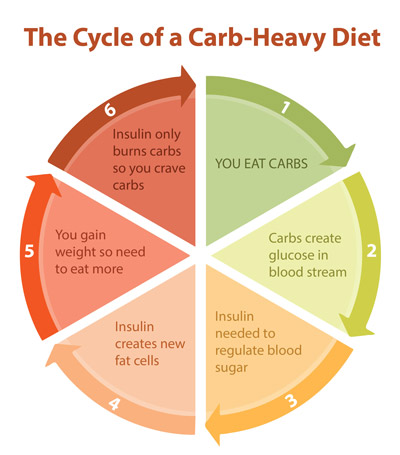
A different way of viewing weight loss identifies the problem as not one of consuming too many calories, but rather the way the body accumulates fat after consuming carbohydrates—in particular the role of the hormone insulin. When you eat a meal, carbohydrates from the food enter your bloodstream as glucose. In order to keep your blood sugar levels in check, your body always burns off this glucose before it burns off fat from a meal.
If you eat a carbohydrate-rich meal (lots of pasta, rice, bread, or French fries, for example), your body releases insulin to help with the influx of all this glucose into your blood. As well as regulating blood sugar levels, insulin does two things: It prevents your fat cells from releasing fat for the body to burn as fuel (because its priority is to burn off the glucose) and it creates more fat cells for storing everything that your body can’t burn off. The result is that you gain weight and your body now requires more fuel to burn, so you eat more. Since insulin only burns carbohydrates, you crave carbs and so begins a vicious cycle of consuming carbs and gaining weight. To lose weight, the reasoning goes, you need to break this cycle by reducing carbs.
Most low-carb diets advocate replacing carbs with protein and fat, which could have some negative long-term effects on your health. If you do try a low-carb diet, you can reduce your risks and limit your intake of pro-inflammatory fats by choosing:
It’s a mainstay of many diets: if you don’t want to get fat, don’t eat fat. Walk down any grocery store aisle and you’ll be bombarded with reduced-fat snacks, dairy, and packaged meals. But while our low-fat options have exploded, so have obesity rates. So, why haven’t low-fat diets worked for more of us?
The Mediterranean diet emphasizes eating good fats and good carbs along with large quantities of fresh fruits and vegetables, nuts, fish, and olive oil—and only modest amounts of meat and cheese. The Mediterranean diet is more than just about food, though. Regular physical activity and sharing meals with others are also major components.
Whatever weight loss strategy you try, it’s important to create the conditions to stay motivated and avoid common dieting pitfalls, such as emotional eating.
Address the root causes of weight gain with a doctor-led program tailored to your body. From initial lab work to ongoing prescription management and nutritional support, Sesame provides everything you need to lose weight safely and effectively. Same-day appointments are often available.
Take Assessment HelpGuide is a user-supported nonprofit. We earn a commission if you sign up for Sesame’s services after clicking through from this site. Learn moreWe don’t always eat simply to satisfy hunger. All too often, we turn to food when we’re stressed or anxious, which can wreck any diet and pack on the pounds. Do you eat when you’re worried, bored, or lonely? Do you snack in front of the TV at the end of a stressful day? Recognizing your emotional eating triggers can make all the difference in your weight-loss efforts. If you eat when you’re:
Stressed. Find healthier ways to calm yourself and become more mindful. Try yoga, meditation, or soaking in a hot bath to ease stress. Mindfulness practices, such as mindful breathing meditation, can help you train your brain to become more present in the moment, which in turn can help you respond to stress in healthier ways, rather than instinctively reaching for food.
Low on energy. Find other mid-afternoon pick-me-ups. Try walking around the block, listening to energizing music, or taking a short nap. It can also help to evaluate what you ate at your last meal. Your meals should be balanced, containing lean protein, complex carbohydrates, non-starchy vegetables, and some healthy fat. Being overly restrictive at mealtimes can often backfire by leaving you feeling drained and in need of a boost later in the day.
Lonely or bored. Reach out to others instead of reaching for the refrigerator. Call a friend who makes you laugh, take your dog for a walk, or go to the library, mall, or park—anywhere there’s people. Taking up a new hobby can also alleviate boredom. A hobby that helps promote mindfulness, such as painting or puzzles, can be especially useful.
Avoid distractions while eating. Try not to eat while working, watching TV, or driving. It’s too easy to mindlessly overeat.
Pay attention. Eat slowly, savoring the smells and textures of your food. If your mind wanders, gently return your attention to your food and how it tastes.
Mix things up to focus on the experience of eating. Try using chopsticks rather than a fork, or use your utensils with your non-dominant hand.
Stop eating before you are full. It takes time for the signal to reach your brain that you’ve had enough. Don’t feel obligated to always clean your plate.
As you begin your healthy living journey, keep in mind why you’re looking to lose weight. Ask yourself how weight loss fits into the overall wellness vision you have for your life. Why is it important to you? You may want to feel more confident or become healthier for your children’s sake. Write down your reasons and keep them handy so you can continue to remind yourself of your healthy living goals.
To stay motivated:
Set behavior goals. Outcome goals like wanting to lose 15 pounds usually don’t work because you only have limited control over them. Rather, create behavior goals that align with the vision you have for your life. A behavior goaI could be to walk, exercise, or go to the gym on specific days of the week in order to feel more confident and energetic. It can also help to tie behavior goals into habits that you already have. For example, if you’re looking to eat more fresh fruit, you could set a goal of eating one piece of fruit after your regular morning coffee.
Find a cheering section. Social support means a lot. Seek out support—whether in the form of family, friends, or a support group—to get the encouragement you need. You may also want to consider working with a health coach or registered dietitian. These professionals are skilled at helping you create attainable goals that align with the vision you have for your life.
Slow and steady wins the race. Losing weight too fast can take a toll on your mind and body, making you feel sluggish, drained, and sick. Aim to lose one to two pounds a week so you’re losing fat rather than water and muscle.
Set goals to keep you motivated. Short-term goals, like wanting to fit into a bikini for the summer, usually don’t work as well as wanting to feel more confident or become healthier for your children’s sakes. When temptation strikes, focus on the benefits you’ll reap from being healthier.
Use tools to track your progress. Smartphone apps, fitness trackers, or simply keeping a journal can help you keep track of the food you eat, the calories you burn, and the weight you lose. Seeing the results in black and white can help you stay motivated.
Get plenty of sleep. Lack of sleep stimulates your appetite so you want more food than normal; at the same time, it stops you feeling satisfied, making you want to keep eating. Sleep deprivation can also affect your motivation, so aim for eight hours of quality sleep a night.
Whether or not you’re specifically aiming to cut carbs, most of us consume unhealthy amounts of sugar and refined carbohydrates such as white bread, pizza dough, pasta, pastries, white flour, white rice, and sweetened breakfast cereals. Replacing refined carbs with their whole-grain counterparts and eliminating candy and desserts is only part of the solution, though. Sugar is hidden in foods as diverse as canned soups and vegetables, pasta sauce, margarine, and many reduced fat foods. Since your body gets all it needs from sugar naturally occurring in food, all this added sugar amounts to nothing but a lot of empty calories and unhealthy spikes in your blood glucose.
Calories obtained from fructose (found in sugary beverages such as soda and processed foods like doughnuts, muffins, and candy) are more likely to add to fat around your belly. Cutting back on sugary foods can mean a slimmer waistline as well as a lower risk of diabetes.
Pay attention to your intake of added sugars by reading the nutrition facts labels. The American Heart Association recommends that women consume no more than six teaspoons (25 grams or 100 calories) of added sugar per day, and men no more than nine teaspoons (36 grams or 150 calories) per day. Most of us in the U.S. consume an average of 17 teaspoons of added sugar per day. Fancy coffee drinks and sugar-sweetened beverages can add 45 grams of added sugar in one serving alone.
Even if you’re cutting calories, that doesn’t necessarily mean you have to eat less food. High-fiber foods such as fruit, vegetables, beans, and whole grains are higher in volume and take longer to digest, making them filling—and great for weight-loss.
It’s generally okay to eat as many non-starchy vegetables as you want—you’ll feel full before you’ve overdone it on the calories. For fresh fruit, it can be helpful to choose lower glycemic fruit such as berries, kiwi, and grapefruit .
Eat vegetables raw, roasted, or steamed, not fried or breaded, and dress them with herbs and spices or a little olive oil for flavor.
Add fruit to low sugar cereal—blueberries, strawberries, sliced bananas. You’ll still enjoy lots of sweetness, but with fewer calories, less added sugar, and more fiber.
Bulk out sandwiches by adding healthy veggie choices like lettuce, tomatoes, sprouts, cucumbers, and avocado.
Snack on carrots or celery with hummus instead of a high-calorie chips and dip.
Add more veggies to your favorite main courses to make your dish more substantial. Even pasta and stir-fries can be diet-friendly if you use less noodles and more vegetables.
Start your meal with salad or vegetable soup to help fill you up so you eat less of your entrée.
Set yourself up for weight-loss success by taking charge of your food environment: when you eat, how much you eat, and what foods you make easily available.
Cook your own meals at home. This allows you to control both portion size and what goes into the food. Restaurant and packaged foods generally contain a lot more sugar, unhealthy fat, and calories than food cooked at home—plus the portion sizes tend to be larger.
Serve yourself smaller portions. Use small plates, bowls, and cups to make your portions appear larger. Don’t eat out of large bowls or directly from food containers, which makes it difficult to assess how much you’ve eaten.
Eat early. Studies suggest that consuming more of your daily calories at earlier meals and fewer at dinner may help you drop more pounds. Eating balanced meals earlier in the day can stabilize hunger and give you more time to burn off the calories.
Fast for 14 hours a day. Try to eat dinner earlier in the day and then fast until breakfast the next morning. Eating only when you’re most active and giving your digestion a long break may aid weight loss.
Plan your meals and snacks ahead of time. You can create your own small portion snacks in plastic bags or containers. Eating on a schedule will help you avoid eating when you aren’t truly hungry.
Drink more water. Thirst can often be confused with hunger, so by drinking water you can avoid extra calories.
Limit the amount of tempting foods you have at home. If you share a kitchen with others, store indulgent foods out of sight.
The degree to which exercise aids weight loss is open to debate, but the benefits go way beyond burning calories. Exercise can increase your metabolism and improve your outlook—and it’s something you can benefit from right now. Go for a walk, stretch, move around and you’ll have more energy and motivation to tackle the other steps in your weight-loss program.
Lack time for a long workout? Three 10-minute spurts of exercise per day can be just as good as one 30-minute workout. For added support for your metabolism, look at ways to incorporate strength and resistance training. This can help you build more lean body mass which can burn more calories than fat tissue.
Remember: anything is better than nothing. Start off slowly with small amounts of physical activity each day. Then, as you start to lose weight and have more energy, you’ll find it easier to become more physically active.
Find exercise you enjoy. Try walking with a friend, dancing, hiking, cycling, playing Frisbee with a dog, enjoying a pickup game of basketball, or playing activity-based video games with your kids.
You may have heard the widely quoted statistic that 95% of people who lose weight on a diet will regain it within a few years—or even months. While there isn’t much hard evidence to support that claim, it is true that many weight-loss plans fail in the long term. Often that’s simply because diets that are too restrictive are very hard to maintain over time. However, that doesn’t mean your weight loss attempts are doomed to failure. Far from it.
Since it was established in 1994, The National Weight Control Registry (NWCR) in the United States, has tracked over 10,000 individuals who have lost significant amounts of weight and kept it off for long periods of time. The study has found that participants who’ve been successful in maintaining their weight loss share some common strategies. Whatever diet you use to lose weight in the first place, adopting these habits may help you to keep it off:
How choosing healthier carbs can improve your health and waistline
This diet can help fight heart disease, diabetes, cognitive decline, and more



Understanding the increased risks to your health





Millions of readers rely on HelpGuide.org for free, evidence-based resources to understand and navigate mental health challenges. Please donate today to help us save, support, and change lives.
Donate to HelpGuide.org today