




This therapist directory is offered in partnership with BetterHelp. If you sign up for therapy after clicking through from this site, HelpGuide will earn a commission. This helps us continue our nonprofit mission and continue to be there as a free mental health resource for everyone.
Need to talk to someone now? Find a crisis helpline
If you're a BetterHelp therapist with questions about your directory listing, please contact therapists@betterhelp.com
Looking to try online therapy? The HelpGuide team analyzed 88 services, surveyed people who’ve used them, and personally tested the top-scorers who met our screening criteria. Here are our recommendations.

We independently test and review all of the services we recommend. When you sign up through our links, we may earn a commission, which helps support our nonprofit mission. Learn More ›
Online therapy makes it easy to seek mental health care from the comfort of your own home. But with so many options, it can be difficult to know which ones to trust. To help you make a more informed choice, the HelpGuide team reviewed 88 online therapy services and surveyed over 1,300 people who’ve used them.
As a nonprofit, HelpGuide’s mission always comes first. Unlike many other top review sites, we do not rank therapy platforms based on commissions, and we never will. You can trust our reviews to be unbiased and based only on our testing, not what we get paid.
According to our testing, BetterHelp tied with Grow Therapy for best online therapy platform (we recommend Grow Therapy for those who have insurance and BetterHelp for those who don’t). They were followed closely by Talkspace, Online-Therapy.com, Brightside Health, MD Live, Thriveworks, and Sesame Care. You can learn more about the strengths and weaknesses of each platform below. We also briefly cover other therapy services, the effectiveness of online therapy, and tips for deciding between options.
88 platforms considered | 104 data points | 14 tested | 1,300+ surveyed
Here’s a quick breakdown of the top eight platforms, their key features, and ratings.
| Platform | Best For | Cost out-of-pocket | Insurance | Wait Time | Rating |
|---|---|---|---|---|---|
| BetterHelp | Overall experience / Extra resources (live group sessions, webinars) | $70+ | Limited | 1-2 days | ⭐ 4.6 |
| Grow Therapy | Low cost with insurance / No subscription required | $75+ | ✅ | 1-2 days | ⭐ 4.6 |
| Talkspace | Therapy + medication management | $69+ | ✅ | 1-3 days | ⭐ 4.5 |
| Online-Therapy .com | Low out-of-pocket costs / Online therapy “toolbox” | $60+ | ❌ | 1-3 days | ⭐ 4.4 |
| Brightside | Coordinated care for therapy + psychiatry | $75+ | ✅ | 1-2 days | ⭐ 4.2 |
| MD Live | Data privacy & security | $179 | ✅ | 1-3 days | ⭐ 4.2 |
| Thriveworks | Therapist follow-up between sessions | $200 | ✅ | 1-4+ days | ⭐ 4.0 |
| Sesame Care | Same-day appointments / People without insurance | $79 | ❌ | 1-3 days | ⭐ 3.9 |
Keep reading for HelpGuide’s take on each of these platforms, including their pros, cons, and what makes them unique.
As part of our research and testing process, the HelpGuide team:
We dive deeper into the details of our methodology further in this article.
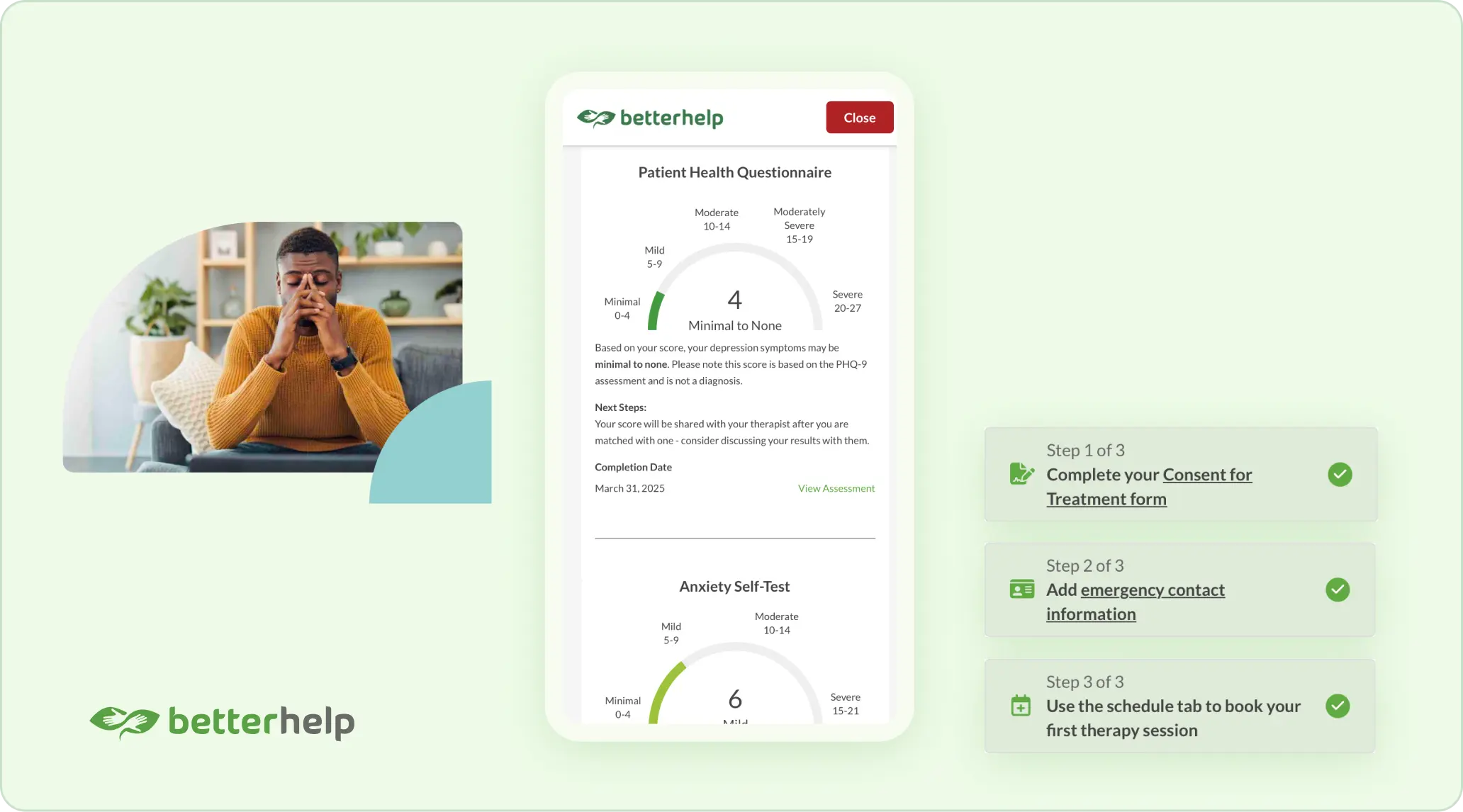
| BetterHelp highlights: | Broad selection of therapists, many extra resources (live group sessions, video learning, etc.) |
| Starting price: | $70-$100 per week (billed monthly) |
| Insurance accepted? | Yes, but coverage is limited |
| Financial aid: | Available (25% of users) |
| Therapy types: | Individual, couples, teens |
| Session formats: | Video, audio, text messaging |
| Time to first session with therapist: | 1-2 days |
| Psychiatry & medication: | Yes, through UpLift |

Tested by: Sheldon Reid, Staff Writer
Tested by: Chris Saranchock, Director of Operations & Multimedia
BetterHelp is one of the largest online therapy platforms, with more than 30,000 licensed therapists in its network. It covers all 50 states in the U.S. and is also available in many countries internationally, including the UK, Canada, Australia, and India.
We’ve tested BetterHelp multiple times, and on each occasion, we’ve appreciated not only the wide selection and quality of therapists but also the level of diversity, the thoroughness of the intake questionnaire, the extra features to support you between sessions, and the ease of switching between providers.
Pros
Cons
Bottom line
Because it’s easy to use and offers extensive options, BetterHelp is a solid starting point for many users. It’s one of the most affordable options if you’re paying out of pocket, and it offers many extras that other platforms don’t have, such as live group therapy sessions and other educational and supportive services. It’s not the right fit for everyone though. For instance, insurance options are currently limited, so, depending on your state and insurer, another platform might be a better fit.
It’s also worth noting that, since our testing, BetterHelp has begun offering psychiatry and medication management services through UpLift. Our staff hasn’t evaluated UpLift yet.
[Read our full BetterHelp review]
Our total score (Based on expert testing and user feedback)
4.6/5
We surveyed 100 BetterHelp users across the United States and had our in-house staff test BetterHelp. In our survey results we found that the biggest strength was accessibility. Regardless of location, users were able to schedule timely sessions, including during evenings and weekends.
Our survey found BetterHelp has:
“I was more aware of my emotions, could cope better with things that were stressing me, and I became more confident.”
Survey respondent
Survey score highlights:
“Prior to this, I was skeptical that I’d be a good fit for telehealth therapy. Now I feel much more comfortable with it.”
Sheldon Reid, Staff Writer
HelpGuide tester ratings:
Overall satisfaction:
Value for cost:
Empathy rating:
Privacy and security rating:
Platform navigation rating:
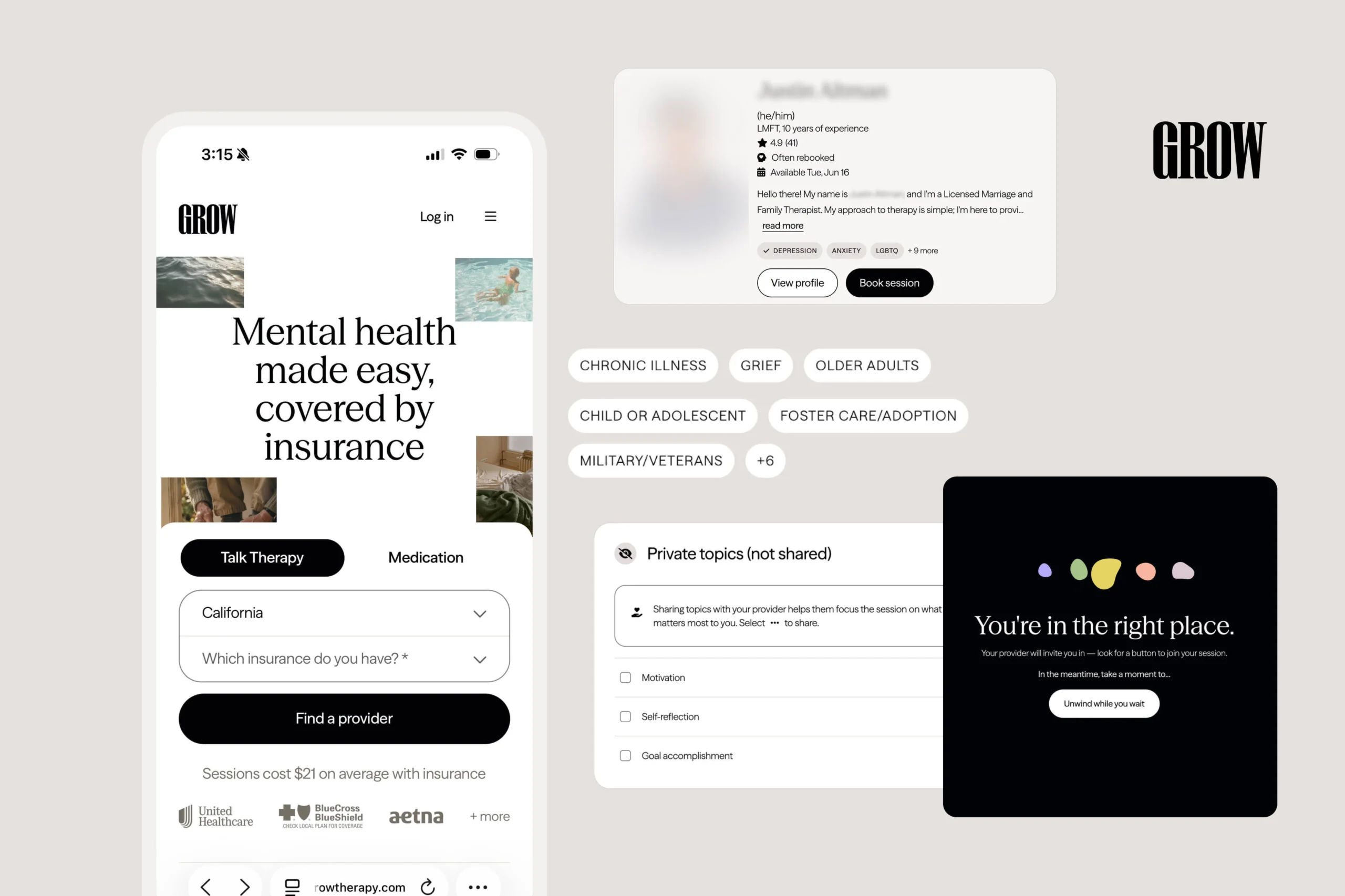
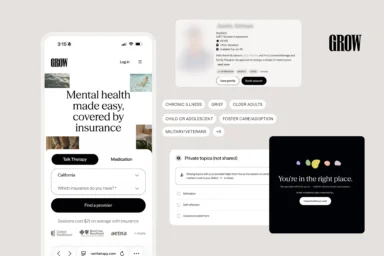
| Grow Therapy highlights: | Pay-per-session, no subscription required. Accepts most insurance. |
| Starting price: | $0-21 average co-pay with insurance ($75-200+ per session without insurance) |
| Insurance accepted? | Yes |
| Financial aid: | Yes |
| Therapy types: | Individual, couples, family, teen, child |
| Session formats: | Video, audio, and text messaging |
| Time to first session with therapist: | 1-2 days |
| Psychiatry & medication: | Yes |
Tested by: Chris Saranchock, Director of Operations & Multimedia
Grow Therapy operates as a nationwide online service. Rather than billing a recurring subscription, it works on a pay-as-you-go basis. You’re charged only for the individual sessions you schedule. The platform partners with more than 125 insurance providers across the country, including Aetna, Anthem, Cigna, Blue Cross Blue Shield, and United Healthcare, plus Medicaid and Medicare coverage in numerous states. The platform also offers financial aid options for self-payers.
What sets Grow Therapy apart is the sheer amount of choices, particularly for insurance users. Its provider network is much bigger than most therapy platforms, and all accept insurance. It even includes options for face-to-face care. Grow Therapy also allows you to select from a range of clinical specialties, including mood issues, phobias, and personality disorders. The result is that users tend to find the right therapist for their needs. 84 percent of the users we surveyed were satisfied with their first match.
Pros
Cons
Bottom line
Grow Therapy can be an excellent way to start your therapy journey, whether you’re looking for online or in-person sessions. It’s also a strong pick for anyone seeking a clinician with expertise in a specific concern. If you don’t want to pay for a monthly subscription, this is likely the platform for you, but know that insurance coverage can really affect the cost.
Our total score (Based on expert testing and user feedback)
4.6/5
We surveyed 100 Grow Therapy users across the United States and had one of our in-house staff test Grow therapy.
Our survey found Grow Therapy has:
“They give you an amazing selection of tools to help you.”
Survey respondent
Survey score highlights:
“If you need online therapy this is a good platform. Everything was clear and the therapists were empathetic and wanted to help you.”
Chris Saranchock, Director of Operations & Multimedia
HelpGuide tester ratings:
Overall satisfaction:
Value for cost:
Empathy rating:
Privacy and security rating:
Platform navigation rating:
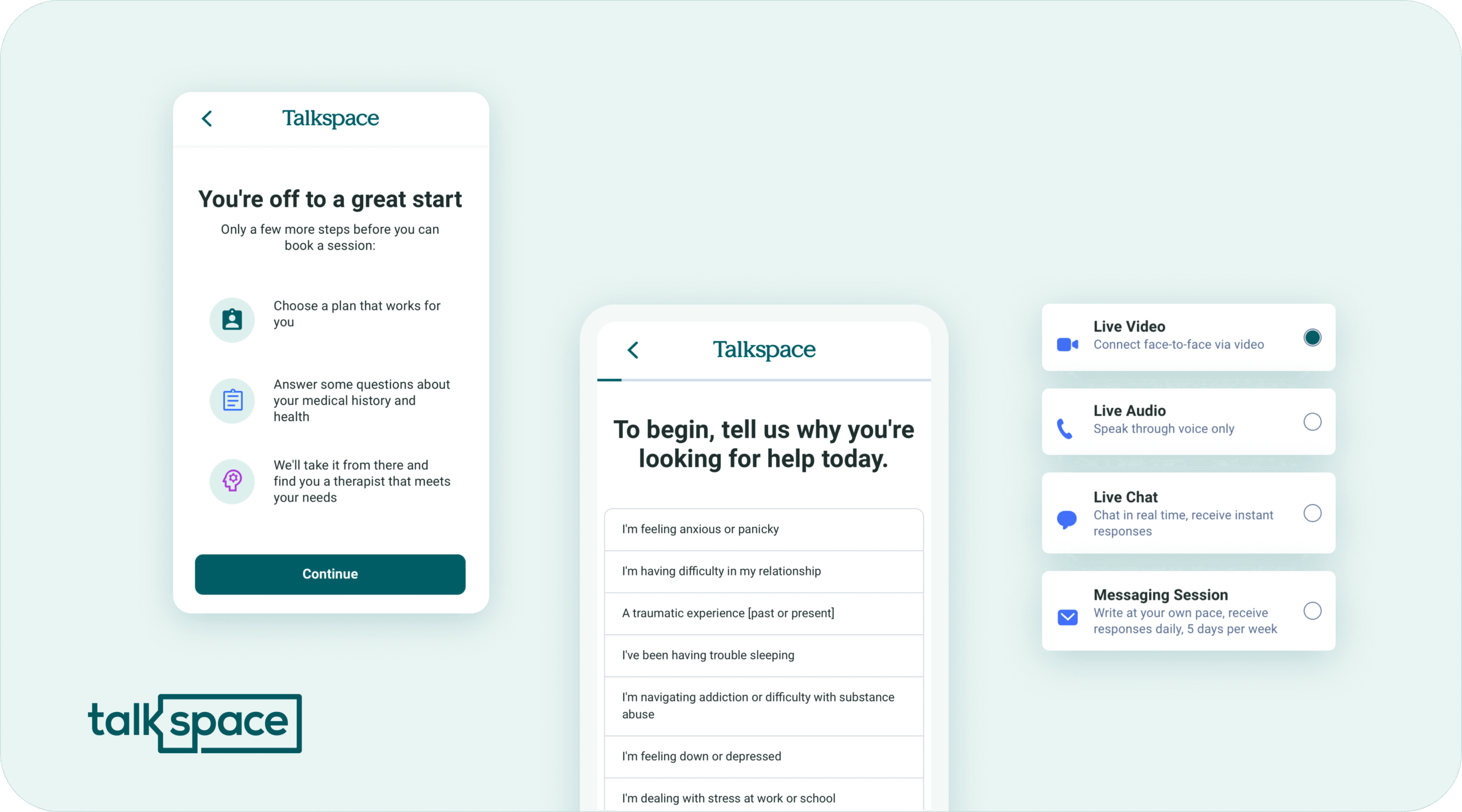
| Talkspace is most suitable for: | People looking for fast insurance approval and therapist matching |
| Starting price: | $69 – $109 per week (billed monthly) without insurance; average copay with insurance $15-30 |
| Insurance accepted? | Yes |
| Financial aid: | No |
| Therapy types: | Individual, teen, couples |
| Session formats: | Video, audio, and text messaging |
| Time to first session with therapist: | 1-3 days |
| Psychiatry & medication: | Yes |
Tested by: Lawrence Robinson, Managing Editor
Tested by: Sheldon Reid, Staff Writer
Talkspace is one of the more well-known online therapy platforms. It accepts insurance from major providers, including Aetna, Anthem, Cigna, Optum, Regence, TRICARE, and Blue Cross Blue Shield. Depending on your plan, you could pay as little as a $15 copay per online therapy session (25 percent of our survey respondents had a copay of $0).
A major advantage of Talkspace is that it allows you to check your insurance coverage before you create an account. This makes it an excellent option when you’re shopping for online therapy options that match your health benefits. On top of that, Talkspace’s wide acceptance of insurance makes it stand out from competitors. The platform also seems to have an effective therapist-matching system in place. Our staff and our survey respondents were overwhelmingly pleased with the first providers they were matched with.
Pros
Cons
Bottom line
Talkspace is a great place to start if you’re hoping to use insurance to cover the cost of therapy or psychiatry. It’s also useful if you’d rather be matched directly with a provider, rather than click through a directory and select one yourself. If you plan to self-pay or require financial aid, you might want to explore a different option.
[Read our full Talkspace review]
Our total score (Based on expert testing and user feedback)
4.5/5
We surveyed 100 Talkspace users across the United States and had one of our in-house staff test Talkspace. In our survey results we found that the biggest strengths were insurance coverage and satisfaction with the quality of therapy. Users described the platform as professional, convenient, effective, and life-improving.
Our survey found Talkspace has:
“Talkspace made me a better person. I applied what I learned and saw real improvement.”
Survey respondent
“I could verify if therapy would be covered by insurance before having to create an account, which I really appreciated. And instantly told me what my copay would be ($15).”
Lawrence Robinson, Managing Editor
HelpGuide tester ratings:
Overall satisfaction:
Value for cost:
Empathy rating:
Privacy and security rating:
Platform navigation rating:
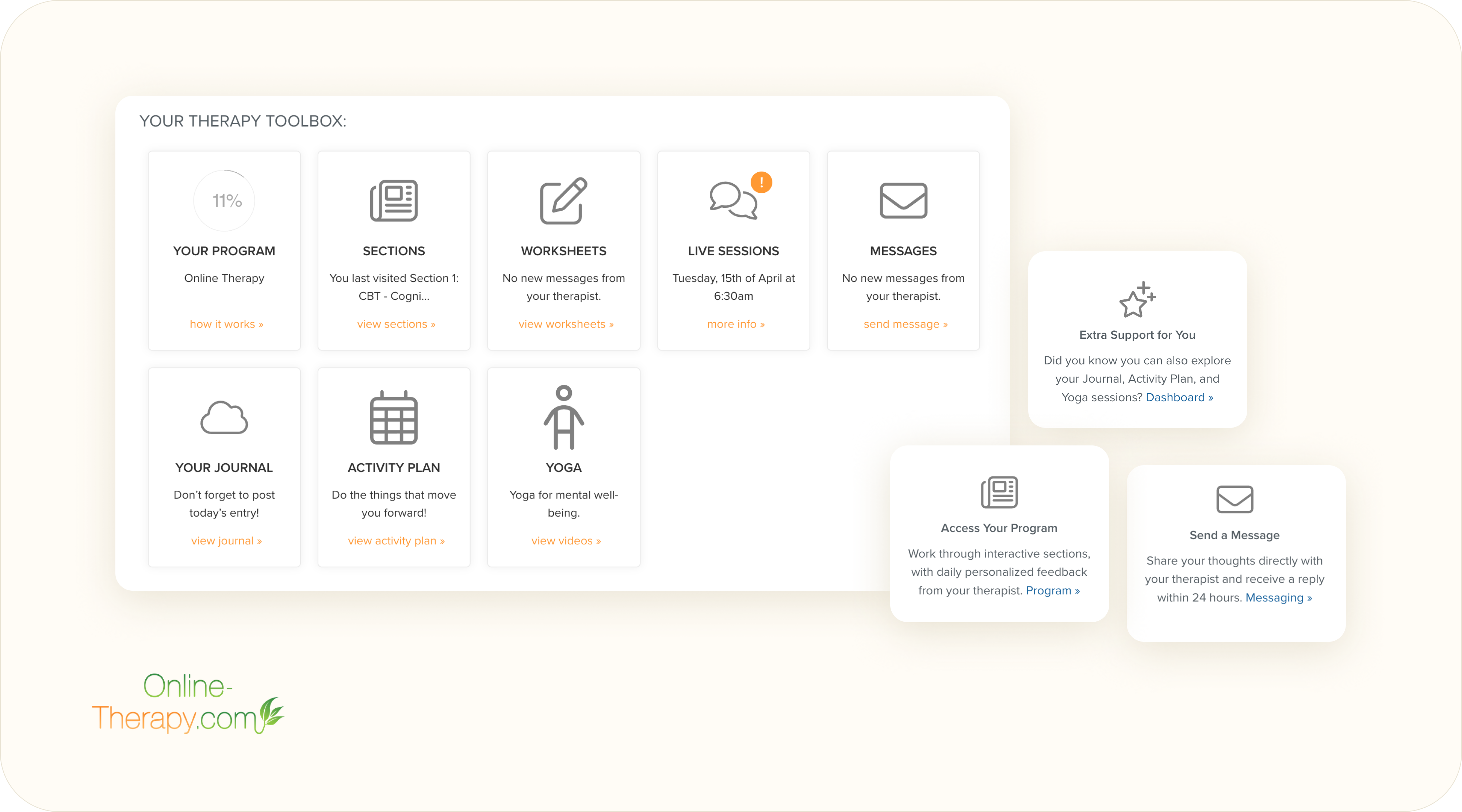
| Online-Therapy.com is most suitable for: | People looking for cognitive-behavioral therapy (CBT) without using insurance |
| Starting price: | $60-$120 per week (billed monthly) |
| Insurance accepted? | No |
| Financial aid: | Available (19% of users) |
| Therapy types: | Individual, couples |
| Session formats: | Video, audio, and text messaging |
| Time to first session with therapist: | 1-3 days |
| Psychiatry & medication: | No |
Tested by: Chris Saranchock, Director of Operations & Multimedia
Available in all 50 states as well as the UK, Ireland, Australia, and Canada, Online-Therapy.com specializes in cognitive behavioral therapy (CBT), one of the most widely used and tested forms of therapy. All the therapists on this platform are experienced in CBT techniques.
Both our staff and our May 2025 survey respondents appreciated the quality of Online-Therapy.com’s therapists, as well as the “therapy toolbox,” which offers extra support through worksheets, learning modules, and activity plans, among other features. The platform also has a quick and easy sign-up process. There were 10 questions on the questionnaire, and it took less than 10 minutes to complete it. 90 percent of survey respondents agreed that it was easy or very easy to get through the sign-up process and intake questionnaire.
Pros
Cons
Bottom line
Online-Therapy.com is best if you’re interested in CBT sessions and prefer a streamlined sign-up process. However, it doesn’t accept insurance, and you might find a wider selection of providers on other platforms.
[Read our full Online-Therapy.com review]
Our total score (Based on expert testing and user feedback)
4.4/5
We surveyed 100 Online-Therapy.com users across the United States and had our in-house staff test Online-Therapy.com. In our survey, users described the platform as reliable, private, effective, flexible, and user-friendly. Both the users and our staff appreciated the quality of therapy and the tools included on the platform, such as worksheets.
Our survey found Online-Therapy.com has:
“My confidence skyrocketed—I felt more in control of my emotions.”
Survey respondent
“I enjoyed my experience with Online-Therapy.com. Worksheets, tools, and yoga were helpful.”
Chris Saranchock, Director of Operations & Multimedia
HelpGuide tester ratings:
Overall satisfaction:
Value for cost:
Empathy rating:
Privacy and security rating:
Platform navigation rating:
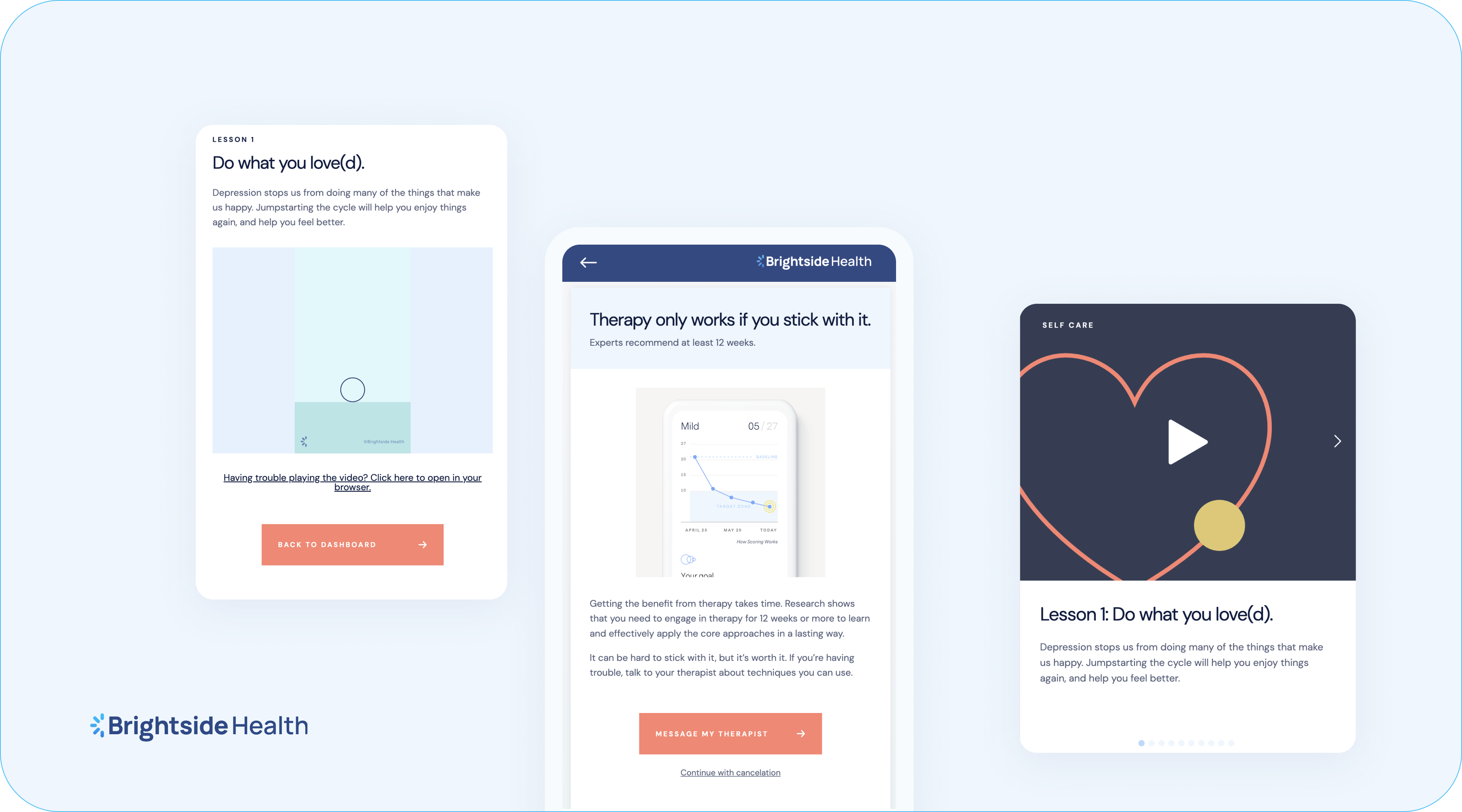
| Brightside Health is most suitable for: | People wanting to use insurance for depression or anxiety treatment |
| Starting price: | $75 per week (billed monthly at $299) |
| Insurance accepted? | Yes |
| Financial aid: | Available (24 percent received) |
| Therapy types: | Individual, teen |
| Session formats: | Video with unlimited messaging between sessions |
| Time to first session with therapist: | 1-2 days |
| Psychiatry & medication: | Yes |
Tested by: Joseph Collerain, Production Coordinator
Brightside Health specializes in the treatment of depression and anxiety disorders (including panic attacks and social anxiety), along with related conditions, such as bipolar disorder, obsessive-compulsive disorder (OCD), premenstrual dysphoric disorder (PMDD), and insomnia. The platform is available in all 50 states and Washington D.C., but is not currently available in any countries outside the U.S.
Our staff and our surveyed users reported that Brightside connected them with excellent online therapy and psychiatry professionals. The platform also stood out for its quick appointments, with 68 percent of surveyed Brightside therapy users and 53 percent of Brightside psychiatry users getting a first appointment within three days. Brightside not only accepts insurance but also has affordable self-pay costs, making it very accessible.
Pros
Cons
Bottom line
Whether you plan to use insurance or not, Brightside Health can be an affordable option with quality providers. However, until you book an appointment, you won’t get to see any provider information aside from their name and qualifications.
[Read our full Brightside Health review]
Our total score (Based on expert testing and user feedback)
4.2/5
We surveyed 100 Brightside users across the United States and had one of our in-house staff test the platform. In our survey results we found that the biggest strength was value for money, therapy experience, and security ratings. The length of the questionnaire was the primary source of frustration for both our staff and surveyed users, but 81 percent still completed the sign-up in under 20 minutes.
Our survey found Brightside has:
“Brightside helped me reframe my thoughts and take better care of myself.”
Survey respondent
“Very good experience, the platform was easy to navigate and the therapists were knowledgeable and goal driven.”
Joseph Collerain, Production Coordinator
HelpGuide tester ratings:
Overall satisfaction:
Value for cost:
Empathy rating:
Privacy and security rating:
Platform navigation rating:
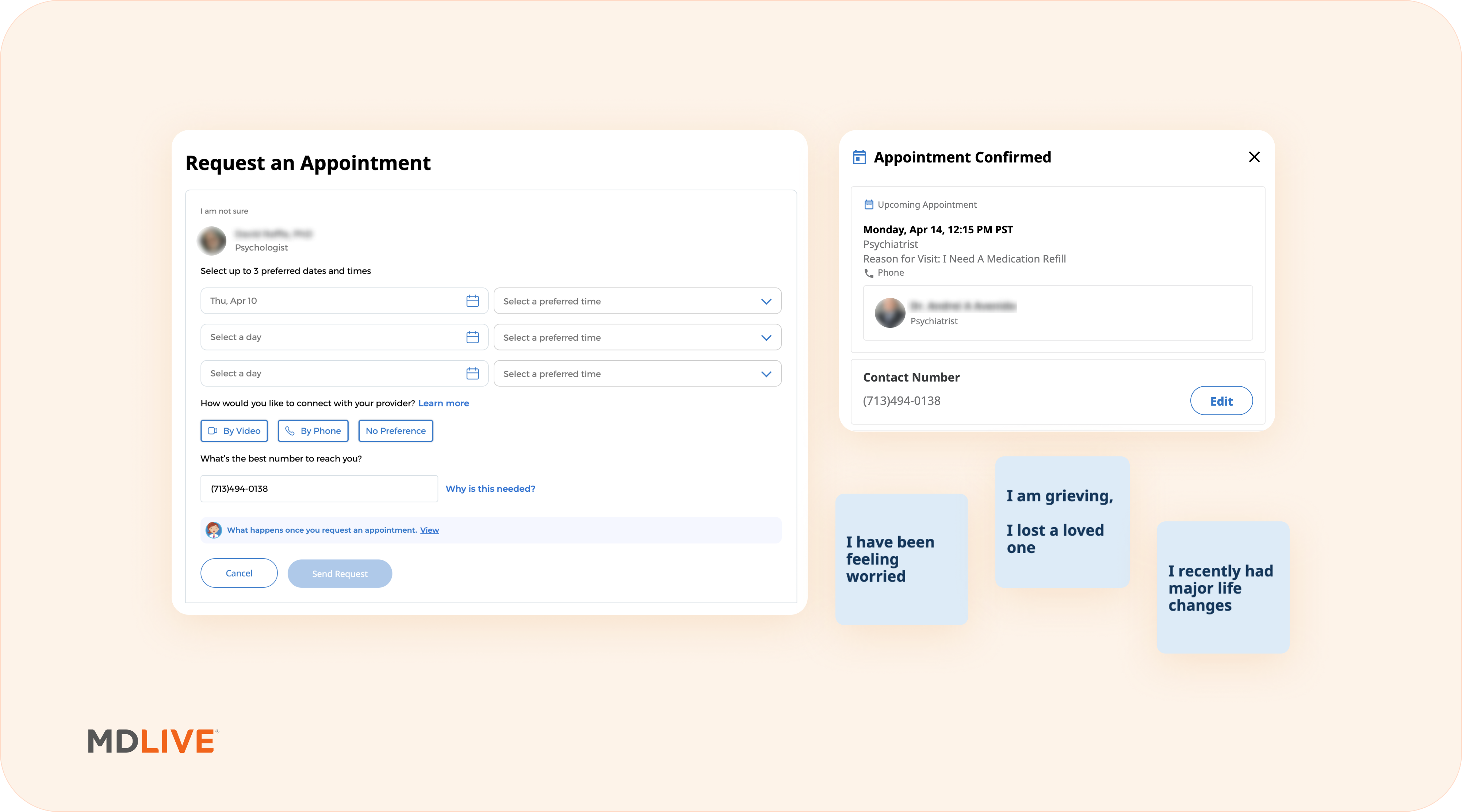
| MD Live is most suitable for: | Insured individuals looking for therapy, primary care, and more |
| Starting price: | Out-of-pocket $179 initial session; with insurance $0-$30 average copay |
| Insurance accepted? | Yes |
| Financial aid: | No |
| Therapy types: | Individual, couples, teens |
| Session formats: | Video |
| Time to first session with therapist: | 1-3 days |
| Psychiatry & medication: | Yes |
Tested by: Sheldon Reid, Staff Writer
Tested by: Chris Saranchock, Director of Operations & Multimedia
MD Live is a platform that allows you to connect with specialists such as doctors, pediatricians, dermatologists, and therapists. It offers a list of providers, allowing users to browse through their options, and it accepts many major insurance plans, such as Cigna, Humana, and Aetna.
MD Live accepts major insurance plans, has a directory that’s easy to navigate, and its sign-up process is so straightforward that it can be completed in minutes. This all makes the platform a good choice for anyone looking to get started immediately. Therapist quality was also high; 86 percent of survey respondents reported that they were satisfied or very satisfied with the first one they chose. Our tester was also very happy with the care he received from his therapist.
Pros
Cons
Bottom line
If the platform accepts your insurance plan, MD Live can be a useful option to explore. It’s especially well-suited to users who don’t mind browsing a directory and selecting a provider for themselves.
[Read our full MD Live review]
Our total score (Based on expert testing and user feedback)
4.2/5
We surveyed 100 MD Live users across the United States and had our in-house staff test MD Live.
Our survey found MD Live has:
“It was so easy, and I didn’t have to plan my day around going to a doctor.”
Survey respondent
“I honestly felt like I was being heard and understood in therapy for the first time.”
Staff Member
HelpGuide tester ratings:
Overall satisfaction:
Value for cost:
Empathy rating:
Privacy and security rating:
Platform navigation rating:
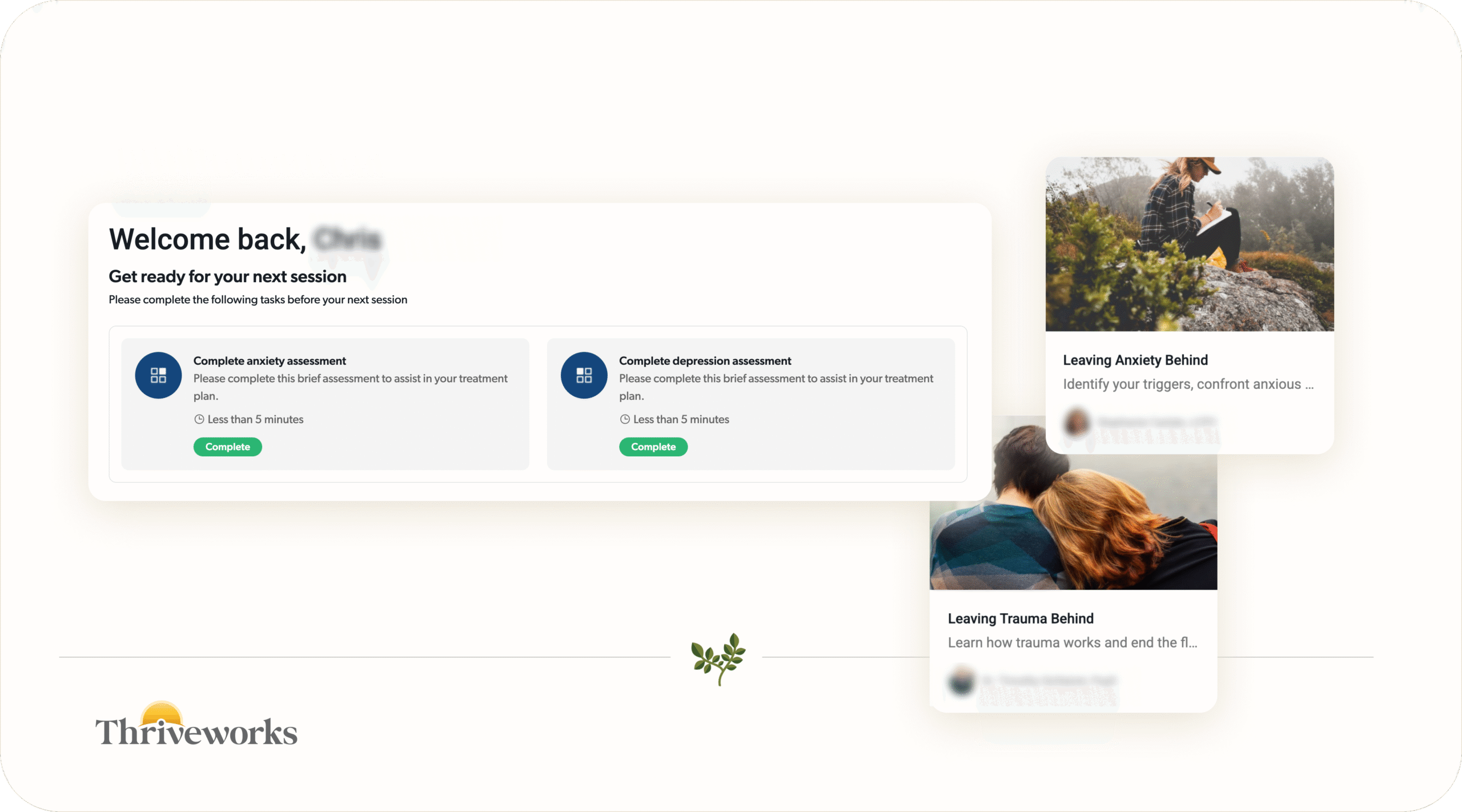
| Thriveworks is most suitable for: | Insured individuals looking for therapy and psychiatry |
| Starting price: | Out-of-pocket $200-240 for initial session; with insurance $0-55 average copay |
| Insurance accepted? | Yes |
| Financial aid: | No |
| Therapy types: | Individual, couples, teens |
| Session formats: | Video, audio |
| Time to first session with therapist: | 1-4+ days |
| Psychiatry & medication: | Yes |
Tested by: Sheldon Reid, Staff Writer
Tested by: Chris Saranchock, Director of Operations & Multimedia
Thriveworks offers individual, couples, and family therapy in every state of the U.S. except Vermont. It also offers psychiatric services.
Thriveworks allows users to browse through providers before signing up for the service. This alone makes it worth exploring, since you don’t have to commit to creating an account first. It accepts more than 300 insurance plans, including those from Humana, Blue Cross Blue Shield, United Healthcare, and Aetna, as well as Medicare.
Pros
Cons
Bottom line
In our Best Online Therapy Platforms that Take Insurance recommendations, Thriveworks just missed out on being one of our top recommendations. Although it gives you the option to learn about providers before you sign up, if Thriveworks isn’t in-network with your insurance or you’re paying out-of-pocket, it can be expensive.
[Read our full Thriveworks review]
Our total score (Based on expert testing and user feedback)
4.0/5
We surveyed 100 Thriveworks users across the United States and had our in-house staff test Thriveworks.
Our survey found Thriveworks has:
“I’ve had a great experience. I like my therapist, and my life has improved.”
Survey respondent
“If I were on an accepted insurance plan and the price was lower, I’d feel better about the value.”
Chris Saranchock, Director of Operations & Multimedia
HelpGuide tester ratings:
Overall satisfaction:
Value for cost:
Empathy rating:
Privacy and security rating:
Platform navigation rating:
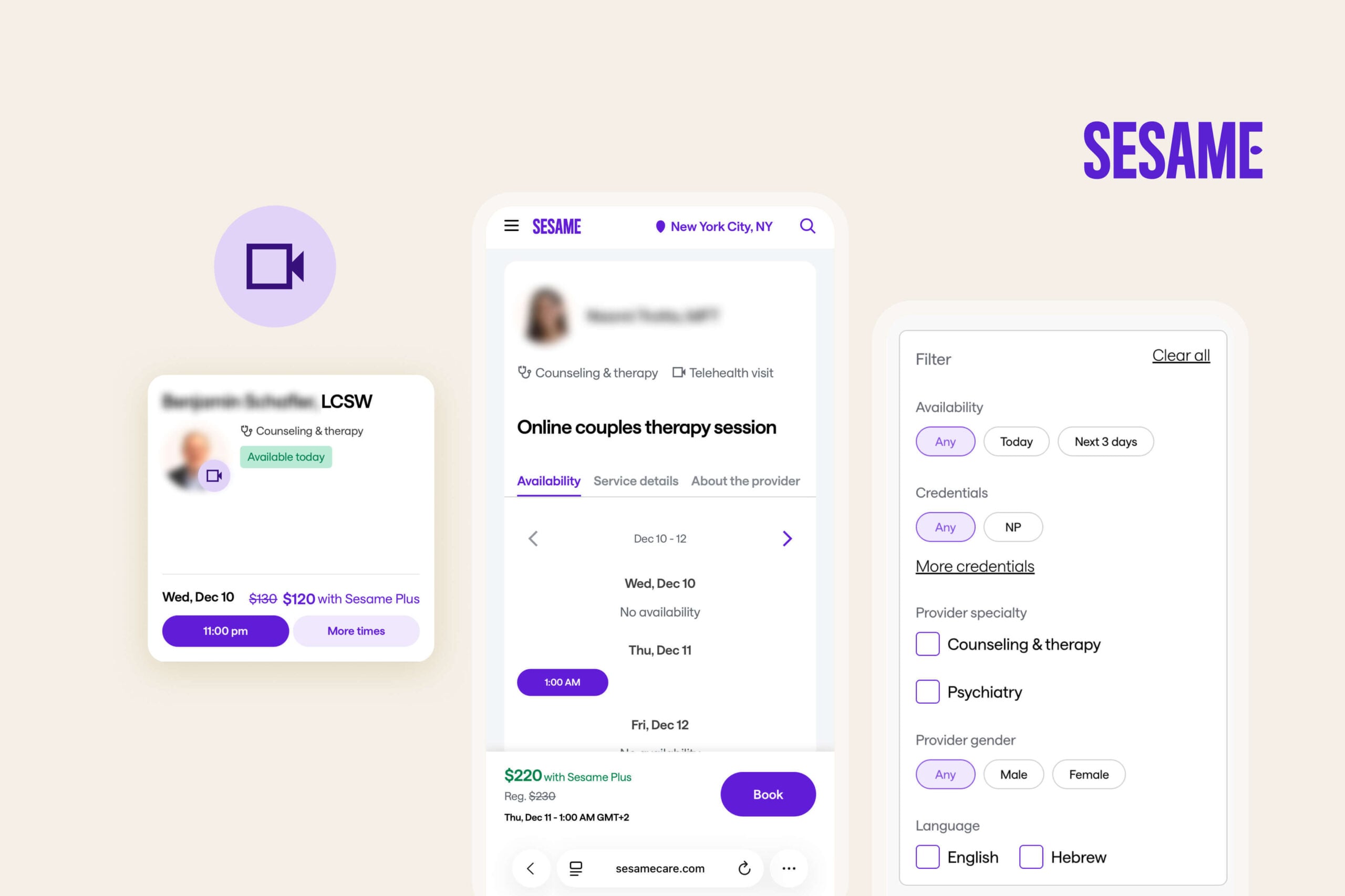
| Sesame Care is most suitable for: | Uninsured individuals looking for quick therapy, primary care, and more |
| Starting price: | ~$79 per session |
| Insurance accepted? | No |
| Financial aid: | No |
| Therapy types: | Individual, couples, teens |
| Session formats: | Video, text messaging |
| Time to first session with therapist: | Same-day often available |
| Psychiatry & medication: | Yes |
Tested by: Sheldon Reid, Staff Writer
Tested by: Chris Saranchock, Director of Operations & Multimedia
Sesame Care is a telehealth service that serves as a marketplace for all sorts of health providers. For instance, users can find professionals who specialize in primary care, urgent care, dentistry, mental health, and prescription refills. The platform doesn’t accept insurance, but offers affordable out-of-pocket prices that vary based on the provider.
Sesame Care stands out for how quickly it can give users access to a variety of providers, including therapists. It’s often possible to find an appointment on the same day as sign-up. Signing up is also a quick process, with 34 percent of surveyed users saying they were able to finish it in under 10 minutes. Sesame Care also stands out in pricing. Providers have different rates, but it’s possible to find therapists at the very affordable rate of $79 per session.
Pros
Cons
Bottom line
If you’re paying out of pocket and want to book an appointment as soon as possible, Sesame Care is worth exploring. You might even consider paying for a subscription if you plan to regularly seek out other providers, in addition to mental health experts.
[Read our full Sesame Care review]
Our total score (Based on expert testing and user feedback)
3.9/5
We surveyed 100 Sesame Care users across the United States and had our in-house staff test Sesame Care.
Our survey found Sesame Care has:
“My experience was great. Very understanding individuals that were well trained in their field.”
Survey respondent
“Great value for just over $100 per session.”
Staff Writer
HelpGuide tester ratings:
Overall satisfaction:
Value for cost:
Empathy rating:
Privacy and security rating:
Platform navigation rating:
Some of the other reputable online therapy platforms that HelpGuide staff tested provided mixed results. Depending on your specific circumstances, they may still be worth considering. However, based on our research and analysis, user surveys, and staff testing, we felt the platforms above ranked higher overall.
Amwell is a telehealth platform that allows you to consult with different types of medical providers, including online therapists and online psychiatrists. Amwell is like a modified directory. You have to sign up for an account before you can browse any providers or see if the service accepts your insurance. Each provider charges their own fees—but these are clearly displayed on their profiles.
In our testing, we found an extremely limited number of available providers. This may have been due to the way in which Amwell operates. If you sign up on Amwell using insurance, you actually will be sent to a branded version of the interface, which focuses on that specific insurance company. However, because during testing we opted for self-pay, the provider list may have been very limited.
LiveHealth Online is a telehealth service that offers video visits in all 50 states with medical and mental health care providers, including therapists. LiveHealth is a covered benefit for most Anthem insurance plans, although you have to create an account to confirm that your specific plan is covered. It is also available through some universities and employers, or you can pay out of pocket.
While 62 percent of our survey respondents thought that LiveHealth Online compared favorably with in-person therapy, our staff was less convinced during testing. We found it difficult to schedule appointments. The available therapists had very limited time slots, requiring several weeks between appointments. In the end, other platforms ranked higher for us, but LiveHealth may still be an option to consider if you happen to have Anthem health insurance.
Cerebral offers mental health care across all 50 states, including individual and couples therapy. The subscription-based platform accepts a number of major insurance plans or you can pay out of pocket. Cerebral has faced some controversy in the past for overprescribing controlled medications and sharing the personal information of users with other companies. The platform has resolved both issues with the Federal Trade Commission (FTC).
Finding a quality provider wasn’t a straightforward process. Initially, all our matches were “associates” working under the supervision of a fully-qualified therapist—they’d completed the education part of their license and were gaining clinical experience. Offering therapy from someone who is not yet fully licensed at a discounted rate could be beneficial for users looking to save money. But the cost was the same for an associate as a fully-licensed therapist.
Another concern arose when we messaged our provider on Cerebral. We received an automated response informing us that our messages were also being viewed by other undisclosed staff at Cerebral.
Doctor on Demand is a telehealth platform that offers both medical and mental health care, including therapy. It accepts many major health insurance plans, but if you’re paying out of pocket, therapy can get expensive: $134 for a 25-minute therapy session or $184 for a 50-minute session. Of the Doctor on Demand users we surveyed in May 2025, only 18 percent elected to pay for therapy without using insurance.
Aside from the high self-pay cost, users also reported some technical issues with Doctor on Demand. 32 percent of our survey respondents experienced technical problems such as difficulty logging in for an appointment or poor video quality during the session.
We didn’t experience issues of that sort, but were frustrated by some of Doctor on Demand’s overall practices. While we signed up to pay out-of-pocket, without our knowledge or permission the platform contacted our insurance company. This meant that the therapist could see our medical history and medications, something we were very uncomfortable about, especially as the therapist proved not to be a good fit.
Online therapy, sometimes called teletherapy or online counseling, allows you to receive mental health support and guidance without visiting an office. Instead, you communicate with your therapist from wherever you are via an Internet connection.
Online therapy sessions can take several forms. Some therapists offer online therapy through their private practices, while others use third-party platforms, such as apps or directories, to connect with patients. Some of these services may limit your contact with a therapist to email, messaging, or live texting, while others include weekly phone calls or live video sessions.
Online therapists can offer a wide range of evidence-based approaches to mental health. For instance, you might take couples therapy sessions with a spouse, or log-in to group therapy with other people struggling with PTSD. One-on-one, an online therapist might use well-known methods such as CBT, DBT, or EMDR to help you heal and grow.
Online therapy is often best for people who prioritize convenience and flexibility over regular face-to-face meetings. For instance, if it’s difficult to commute to your therapist after work or between other responsibilities, telehealth can be very beneficial. The same is true if you can’t seem to find the right therapist for you in your local area.
Decades of evidence-based research point to in-person therapy being an effective way to treat many different mental and emotional health problems. Since online therapy is a far newer form of therapy, there hasn’t been nearly as much research into its effectiveness.
The studies that have been conducted show some encouraging results. For example, some research has found that therapeutic alliances—the mutual trust and engagement between therapist and patient—can be as strong in video calls as they are in person. These alliances are one of the key predictors of treatment success.
Our own research results have been equally encouraging. We asked over 1,300 users of online therapy platforms about the effectiveness of online therapy compared to traditional in-person therapy. Here’s what they told us:
64%
of respondents said online therapy was equally effective as in-person therapy.
21%
said online therapy was more effective than their previous in-person experiences.
15%
reported that in-person therapy was more effective for them.
“My therapist online was more consistent and engaged than the one I saw in person for two years. I felt more comfortable opening up from home.”
Survey respondent
Some mental health experts argue that it is still too early to say whether online therapy is an adequate alternative to (or replacement for) in-person therapy. Still, online therapy—and online therapy platforms, in particular—might be a convenient first step, especially if you’re new to therapy or looking to schedule an appointment as soon as possible.
When choosing the right online therapy platform, you’ll want to consider multiple factors, perhaps most notably the cost of care and insurance acceptance. Your preferred type of therapy and your prescription medication needs are also important.
Start by exploring Talkspace, Brightside Health, MDLive, Thriveworks and other platforms that accept a broad range of major carriers. Some services, including Talkspace and Thriveworks, save you time because they allow you to check your insurance coverage before sign-up.
Psychiatrists can prescribe medication you might need to manage severe symptoms or disorders. Platforms such as Talkspace, Brightside Health, and MD Live can all put you in touch with psychiatrists.
Most platforms offer therapists trained in multiple approaches. You might even be able to filter your search by therapy type or request to be matched with a provider who specializes in a certain approach. However, if you’re interested specifically in CBT, you might consider Online-Therapy.com.
If affordability is a concern, weigh your options based on the lowest starting price per session. Also consider that some platforms offer financial aid. For instance, according to our survey, about 25 percent of BetterHelp users were able to take advantage of financial aid. If you don’t have insurance or are struggling to afford therapy, you may still have some options:
In our survey, we asked users how they thought online therapy measured up against in-person sessions. Here’s what we learned.
Key reasons users preferred online therapy:
Key reasons users preferred in-person therapy:
| Online Therapy | In-Person Therapy | |
|---|---|---|
| Accessibility | 24/7 access | Limited hours |
| Average cost | Out of pocket: $60-200+ Insurance copay: $0-50 depending on plan, deductible, etc. | Out of pocket: $100-200+ Insurance copay: $0-50 depending on plan, deductible, etc. |
| Effectiveness | 64% rated it as effective as in-person therapy, according to our survey results | 15% rated it more effective than online therapy |
| Top benefit | Convenience and flexibility | Greater sense of personal connection |
| Largest drawback | Can feel detached or less personal sometimes | Less convenient |
Online therapy isn’t the right option for everyone. Here are some limitations that might steer you toward in-person therapy instead.
Once you’ve found a platform and therapist that meet your needs, you’ll want to make sure you’re set up for your first session. Here are some steps to take to ensure you get the most out of online therapy.
For over 25 years, HelpGuide has been a trusted nonprofit helping millions of people each year improve their mental health and wellness. Our mission has always been to empower people with well-researched, accurate information that they can use to strengthen their mental health and well-being—and we bring those same values and principles to our online therapy reviews.
Read our full testing methodology.
Data research and comparative analysis
Our analysis began by researching 88 reputable online therapy platforms (as well as numerous directories). Among other factors, our team analyzed pricing models, cancellation policies, platform certifications, types of therapy offered, and privacy and security measures to help identify which services offer the best value and safest user experience. We weighted each feature, totaled up the scores, and then hand-tested the highest rated.
User surveys
Since HelpGuide staff members are based in just three different U.S. states, we wanted to broaden our net to gauge the opinions of users from all across the country. So, in addition to our hands-on testing, we also conducted extensive surveys with over 1,300 real online therapy users to measure factors such as satisfaction, therapist responsiveness, value for money, and platform usability.
Professional feedback
To validate our testing methodology, we consulted with licensed therapists, psychologists, and psychiatrists, including members of our Professional Advisory Council. These mental health professionals reviewed our evaluation criteria and helped us refine how we scored platforms for therapist quality, care structure, and ethical standards. Their input ensured our rankings reflected what truly matters in a therapeutic setting, like emotional safety, professional integrity, and clinical effectiveness.
Hands-on testing
After narrowing down all the platforms we researched to 14 options that met our scoring qualifications, HelpGuide staff members used each platform for a minimum of four weeks as regular users, without disclosing who we worked for or what our aims were. During our testing, we each kept a weekly journal recording our experiences and completed detailed questionnaires so we could accurately compare and contrast the different platforms. At the end of testing, we matched notes and shared experiences to help inform our choices for the best online therapy platforms.


Therapist quality and matching accuracy

Pricing and value for money

Session types and communication options

Ease of use and platform navigation

Insurance coverage and payment options

Privacy and security

Customer service experience
Some research shows that online therapy could be as effective as in-person therapy. The effectiveness largely depends on your therapeutic alliance with your therapist, and this type of trusting relationship can form online or in person.
It depends on your goals and needs, and your options may be limited based on the service you use. Most online therapy platforms offer weekly sessions as part of a monthly subscription. But others such as Grow Therapy and Sesame Care allow you to book sessions as often as you want and need without locking you in to a subscription. If you’re hoping to see a therapist more or less frequently than once a week, be sure to take that into account when choosing a platform.
Insurance coverage varies widely based on the platform you’re using or the provider you’re seeing. Some online therapy platforms that accept insurance include Grow Therapy, Talkspace, Thriveworks, and MD Live. For more information, see our take on The Best Online Therapy Platforms that Take Insurance.
Without insurance, online therapy can range from anywhere between $60 (the average cost per week for Online-Therapy.com) to upwards of $179 (as is the case with Thriveworks).
How much does online therapy cost with insurance?
This depends on your coverage and the platform you’re using. For instance, the average copay on Talkspace ranges from $15 to $30 per session, while the average copay on Thriveworks ranges from $0 to $55. See our review of the best online platforms that take insurance.
Does Medicare cover online therapy?
Medicare Part B covers mental health services, including online therapy. You can check your eligibility for Medicare with a tool on the program’s official website.
Which online therapy platforms can prescribe medication?
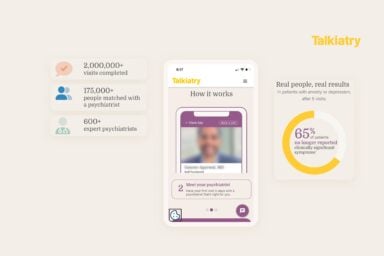
Online therapy platforms that include psychiatric services have providers who can prescribe medication. Some examples include Talkspace, Talkiatry, Brightside Health, and Sesame Care. See our review of the best online psychiatrist platforms we’ve tested.
Are there therapy resources for underserved populations?
Yes. National Queer & Trans Therapists of Color Network provides mental health practitioners with a focus on the queer and trans people of color (QTPoC) community. Therapy for Black Girls offers resources for women of color, and Therapy for Black Men offers a directory of therapists catering to Black men and boys.
We’d love to hear from you! Your feedback helps us improve and make sure you’re finding the support and information you need.
How to get the most out of your therapy and counseling


HelpGuide’s experience testing this online therapy and psychiatry platform
HelpGuide's review of the online psychiatry platform, based on personal testing.
Infidelity can devastate a marriage, but healing is possible.

Certain over-the-counter anxiety medications might help calm your mind. Explore the benefits, limitations, and risks of natural remedies and supplements.
We surveyed real couples who used Regain, and a HelpGuide staff member personally tested its services with a partner. Here’s what we learned about the couples therapy platform.


Millions of readers rely on HelpGuide.org for free, evidence-based resources to understand and navigate mental health challenges. Please donate today to help us save, support, and change lives.
Donate to HelpGuide.org today